how-to
How to Recover a Car from a Ditch Safely
Last Updated: November 4, 2026
Quick Summary
The safest way to recover a car from a ditch is a professional winch recovery, not driving or pushing it out. Recovery operators check how the car is resting, the ground and the attachment points before any pull. SRL Recovery offers ditch recovery 24/7 on 01698 700970, with the price quoted on the phone before dispatch.
- Do not try to drive or push a car out of a ditch yourself.
- Turn on hazard lights and keep clear of traffic while you wait.
- Recovery operators check the car's position, the ground and the attachment points first.
- Winch and skate fee is £40, only where required, subject to VAT.
- Call 01698 700970 to get a price on the phone before dispatch.
Table of Contents
- What to Do First When Your Car Is in a Ditch
- Is It Safe to Pull a Car Out of a Ditch Yourself?
- Why Professional Winch Recovery Service Matters
- Equipment Used in Professional Ditch Recovery
- Vehicle Recovery Costs: What Affects the Price
- Does Breakdown Cover Include Ditch Recovery?
- Booking Your Ditch Recovery With SRL Recovery
- Frequently Asked Questions
What to Do First When Your Car Is in a Ditch
Stay calm and make your car safe before you do anything else. Turn on your hazard lights, keep everyone inside the vehicle if the road is busy, and only get out once you can do so safely.
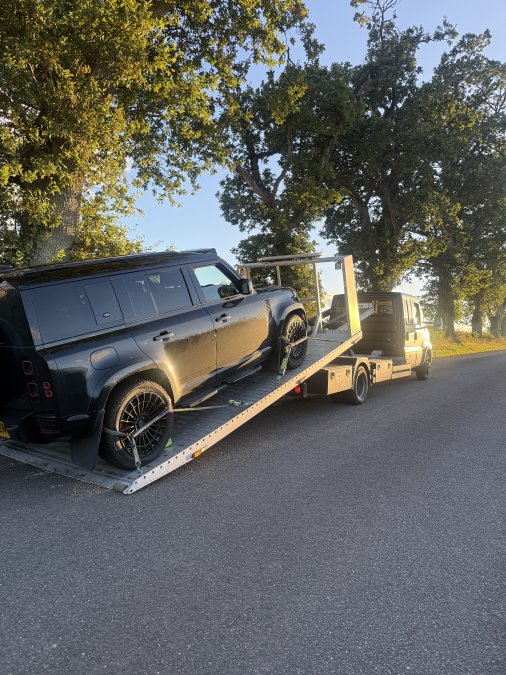
Call SRL Recovery on 01698 700970 for immediate dispatch, 24/7. We will ask for your location, what has happened, and your vehicle make and model. We quote the price on the phone before we set off.
If anyone is hurt or in danger, call 999 first (First aid on the road).
- Turn on hazard lights and keep clear of traffic
- Do not try to drive the car out of the ditch
- Note your location, a postcode or nearby landmark
- Take photos of the car's position if it is safe to do so
Is It Safe to Pull a Car Out of a Ditch Yourself?
In most cases, no. A car in a ditch can shift without warning, and the ground around it is often softer than it looks. Before any recovery starts, a professional checks three things: how the car is resting, what the ground will take, and where a safe attachment point is.
Assessing how the car is resting
A car in a ditch is rarely sitting flat. It may be leaning on one side, resting on its suspension, or balanced on a bank. Each of those changes how it will move when pulled. A vehicle on a slope can roll further once the wheels lose grip, and a car resting on its sump or sill can drop suddenly when it is freed.
Most practitioners find that the first check is whether the car is stable enough to leave while equipment is set up. If it is not, the recovery is planned around keeping it still rather than pulling it straight away.
Checking the ground
Soft verges, wet grass and mud are common around roadside ditches. A recovery vehicle needs firm ground to work from, and the winch line needs a clear path. If the ground is too soft, the recovery vehicle itself can sink or slide, which is why the operator often positions it well back from the ditch edge.
Finding a safe attachment point
Improper attachment points or excessive force during recovery can lead to secondary damage, such as bumper displacement or structural stress. Manufacturer-approved towing points are the correct place to attach a winch line. A random chassis point, a suspension arm or a bumper bracket can fail under load.
Watch out: a car that looks stable can move as soon as the winch takes up tension. Keep well clear of the winch line and the vehicle while it is being pulled.
Why driving or pushing it out is a bad idea
Trying to drive out of a ditch spins the wheels, which digs the car deeper and can damage the transmission or clutch (Winter Driving Advice). Pushing puts you behind or beside a vehicle that can roll. Neither is a safe substitute for a controlled winch recovery.
If the car is on a motorway or a fast road, follow the Highway Code safety guidance before anything else. If anyone is hurt or in danger, call 999 first. Otherwise, call SRL Recovery on 01698 700970 and get a price on the phone before we set off.
Why Professional Winch Recovery Service Matters
A professional recovery operator assesses the vehicle before any equipment is attached. They check the ground, the angle of the car, and where it is safe to fix the winch cable.
Best practice guidance for roadside recovery operators, including the use of hazard warning lights on recovery vehicles, sets out how the work should be made safe for everyone on the road (SURVIVE Group Best Practice Guidelines for roadside recovery).
Winch recovery is controlled and measured. It reduces the strain on your vehicle and the risk to people nearby.
Equipment Used in Professional Ditch Recovery
A ditch recovery is a planned sequence, not a single pull. The equipment is chosen to match the car, the ground and the angle. Here is what a professional recovery typically involves, and why each part matters.
The winch and the recovery vehicle
The recovery vehicle stays on firm ground, often well back from the ditch edge. Its winch pays out a cable to the car and pulls it slowly and steadily. The recovery vehicle's own weight and brakes act as the anchor, which is why it is positioned carefully before any tension is applied.
Snatch blocks and direction changes
A snatch block is a pulley that changes the direction of the pull. It lets the operator pull a car out at an angle that keeps the winch line clear of kerbs, walls or the recovery vehicle itself. Without one, some ditch positions cannot be recovered safely from the available ground.
Attachment points and bridles
The winch line is attached to manufacturer-approved towing points, often using a bridle to spread the load across two points. This reduces the strain on any single part of the car and lowers the risk of bumper or chassis damage.
Skates and flatbeds
A skate is a wheeled dolly placed under a wheel that will not turn or has been damaged. It lets the car be moved without dragging that wheel. A flatbed may be used when the car is too damaged to winch safely, or when it needs to be transported after recovery rather than driven.
What the operator checks before the pull
- The car's position and how it is resting
- The ground under the recovery vehicle and around the ditch
- The route the car will take as it comes out
- The attachment points and the condition of the winch line
- Whether anyone is standing in the line of movement
Watch out: a winch line under load stores energy. If a cable or attachment fails, it can recoil. That is why bystanders are kept well back and why the operator controls the pull from a safe position.
SRL Recovery carries winching and flatbed equipment for ditch, embankment and slope recoveries across Glasgow and Lanarkshire. The winch or skate fee is £40, only where required, and all prices are subject to VAT. Call 01698 700970 to get a price on the phone before dispatch, or see the car recovery prices page for how costs are calculated.
Vehicle Recovery Costs: What Affects the Price
The cost depends on how far the vehicle has to travel, the type of recovery, and any winch fee needed.
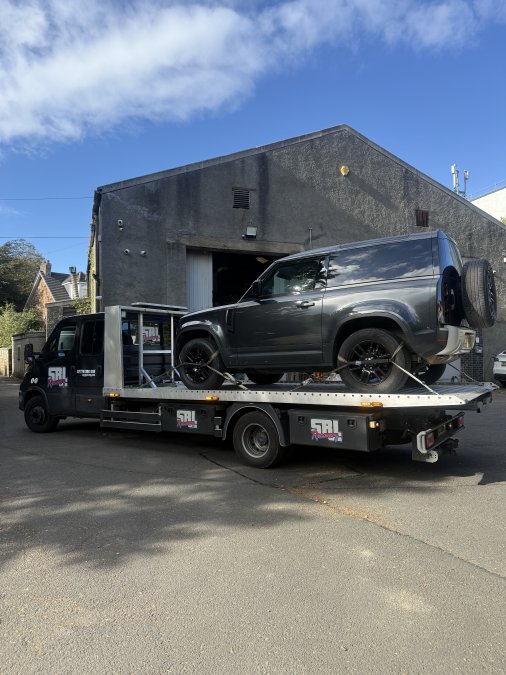
- Local recovery: from £60 call-out plus £1.50 per mile
- Motorway and live-lane recovery: £120 flat plus £1.50 per mile
- Winch or skate fee: £40, only where required
- All prices are subject to VAT
We quote on the phone before dispatch. There is no out-of-hours, weekend or bank holiday surcharge. You pay by cash, card or bank transfer once the job is complete.
The price depends on distance, the type of recovery and whether a winch is needed.
| Item | Price | Note |
|---|---|---|
| Local recovery | From £60 call-out plus £1.50 per mile | Subject to VAT |
| Motorway and live-lane recovery | £120 flat plus £1.50 per mile | Subject to VAT |
| Winch or skate fee | £40 | Only where required |
| Out-of-hours surcharge | None | Same price at any hour |
Does Breakdown Cover Include Ditch Recovery?
You do not need membership or breakdown cover to book SRL Recovery. We work on a pay-as-you-go basis, so you can call us whenever your car is stuck.
If your car is on the M8 or another motorway, our motorway recovery service in Glasgow covers live-lane and hard-shoulder jobs.
Booking Your Ditch Recovery With SRL Recovery
SRL Recovery is a 24/7 car and breakdown recovery service based in Cambuslang, Glasgow. We cover Glasgow and Lanarkshire, with an average arrival time of 30 to 45 minutes.
Broken down now? Call SRL Recovery on 01698 700970 for immediate dispatch, 24/7. You can also reach us on WhatsApp at 07776 356 556.
Frequently Asked Questions
Is it safe to try and pull a car out of a ditch yourself?
Attempting a self-recovery is risky. A car on a slope can shift suddenly, and a rope or strap under load can snap back with force. Ground that looks firm may give way under the weight. Unless the car is only lightly stuck and no one is at risk, call SRL Recovery on 01698 700970 for a professional extraction, available 24/7.
What equipment is needed for ditch recovery?
Professional ditch recovery usually involves a recovery vehicle with a winch, a snatch block, recovery straps and a secure anchor point. SRL Recovery uses this kind of equipment so the car can be lifted or pulled out with controlled force, reducing the risk of chassis or bumper damage.
How much does it cost to winch a vehicle from a ditch?
SRL Recovery's local recovery starts from a £60 call-out plus £1.50 per mile, with a £40 winch fee where a winch is required. All prices are subject to VAT and quoted on the phone before dispatch, with no out-of-hours surcharge. Call 01698 700970 to get a price before we set off.
