how-to
How Long Accident Recovery Claims Take: 2026 Guide
Table of Contents
- How Long Accident Recovery Claims Take: The Realistic Timeline
- The Car Insurance Claim Process After an Accident, Step by Step
- Vehicle Recovery After an Accident: What Happens to Your Car
- How to Claim Vehicle Recovery Costs Back
- Common Reasons for Insurance Claim Delays After a Car Accident
- How to Speed Up an Accident Recovery Claim
- Conclusion
- Frequently Asked Questions
Last Updated: October 9, 2026
How Long Accident Recovery Claims Take: The Realistic Timeline
Most straightforward accident recovery claims settle in two to six weeks, but the honest answer is that no two claims run at the same speed. At SRL Recovery, we handle recovery and claim paperwork, and the pattern is always the same: the claim moves as fast as the evidence allows. Below, we break down realistic timeframes for how long accident recovery claims take, what slows them down, and how to push yours through faster.
A simple, fault-admitted bump with photos and a police reference can wrap up in days. A disputed claim with injuries, missing witnesses, or an unresponsive insurer can drag on for months. The difference rarely comes down to luck. It comes down to paperwork.
Typical Timeframes for Straightforward Claims
A clean, no-dispute claim usually follows a predictable path:
- Recovery itself: same day, often within 30 to 45 minutes of your call
- Claim registered: 24 to 48 hours after you report it
- Insurer assessment: 3 to 10 working days
- Settlement or repair approval: 2 to 4 weeks from the incident
If the other driver admits fault and your insurer has everything it needs, you can have your car recovered, assessed, and repaired inside a month. That is the best-case scenario, and it is more common than people think.
When Claims Run Longer: Complex Cases
Disputed fault is the biggest time thief. When both insurers argue over who caused the crash, claims regularly stretch to two or three months. Other factors that slow things down:
- Injuries that need medical reports before the claim can close
- Uninsured or untraceable third parties
- Vehicles written off, which needs a separate valuation process
- Missing police reports or reference numbers
The more people involved in agreeing the outcome, the longer the clock runs.
The Car Insurance Claim Process After an Accident, Step by Step
The car insurance claim process after an accident follows a set sequence, and knowing it helps you spot where yours has stalled. Here is how it normally runs:
- Report the incident to your insurer as soon as you can, ideally the same day
- Arrange recovery of your vehicle so it is off the road and secure
- Submit your evidence: photos, witness details, police reference
- Insurer assessment of damage and fault
- Repair, write-off, or settlement decision
- Payment or repair completed
Each step depends on the one before it. A hold-up at step three delays everything downstream.
What You'll Need Before You Start
Gather these before you call anyone, and your claim moves noticeably faster:
- Your policy number and the other driver's details
- Photos of all damage, plus the wider scene
- Names and contact details of any witnesses
- The police reference number, if officers attended
- A written note of what happened, in your own words, while it is fresh
Vehicle Recovery After an Accident: What Happens to Your Car
Vehicle recovery after an accident means getting your car safely off the road and to a place where it can be assessed or repaired. That might be a garage, a compound, or secure storage if the claim is disputed.
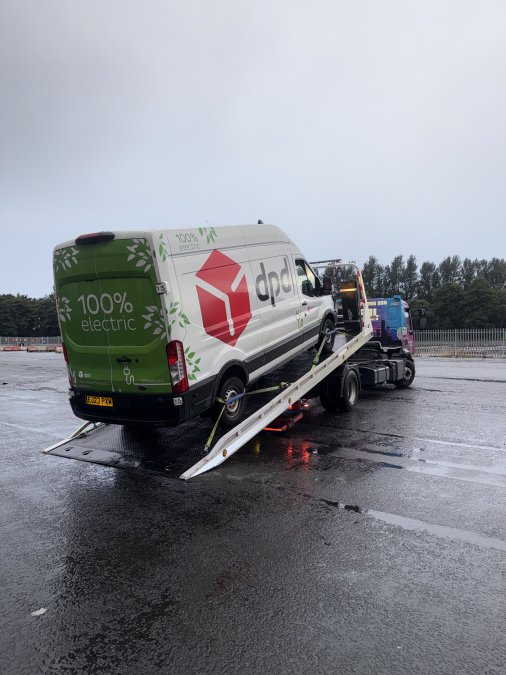
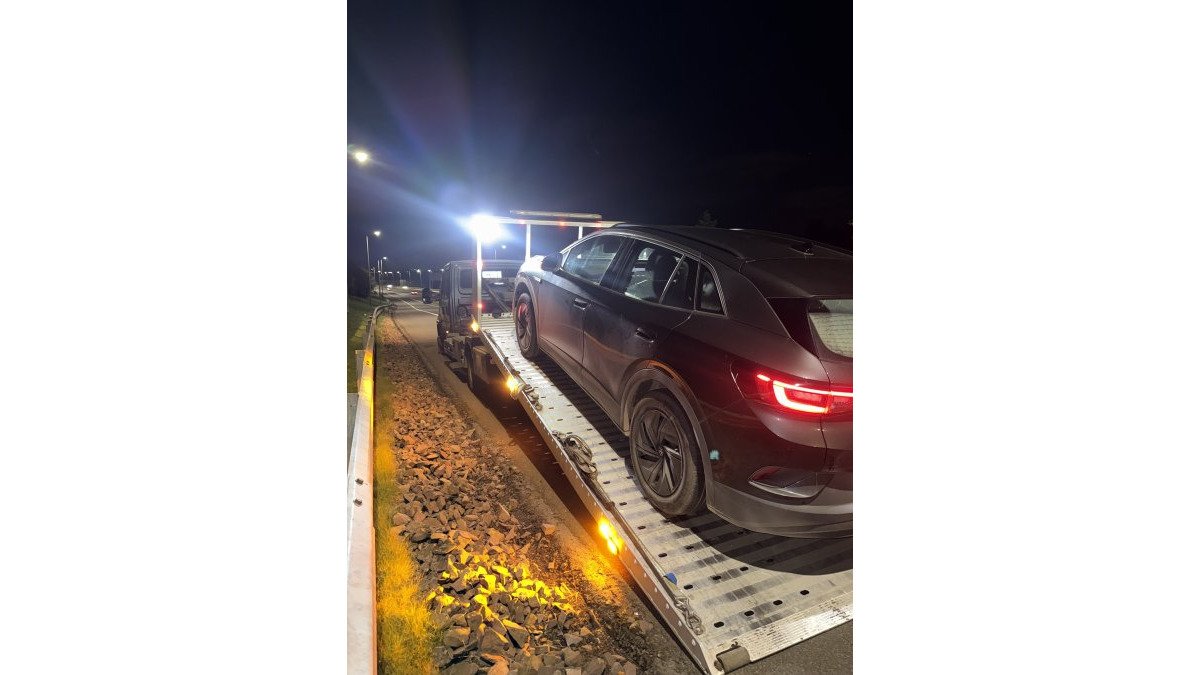
At SRL Recovery, we use tilt and slide trucks and a super low approach vehicle, plus race ramps for lower cars. That matters for electric vehicles, hybrids, and motorhomes, which need care when loaded. We also handle vehicles with no keys, cars locked in park, and vehicles in ditches. Alongside car recovery, we provide van recovery for commercial vehicles, and our five tilt and slide trucks can legally carry 3.5t vans and vehicles up to 7.2t, with HGV recovery and secure storage also available.
Once recovered, your car sits securely until the insurer decides on repair or write-off. Secure storage protects it from further damage, which protects your claim.
How to Claim Vehicle Recovery Costs Back
You can usually claim vehicle recovery costs back as part of your insurance claim, provided you keep the right paperwork. Most policies cover recovery after an accident, but only if you can prove what you paid and why.
The key is documentation. Without a receipt, an insurer has nothing to reimburse.
Keeping the Paperwork That Matters
Hold on to these:
- The recovery invoice, showing the date and job details
- Any payment receipt or bank record
- Your incident report and police reference
- Photos taken at the scene
- Correspondence with your insurer
Keep digital copies as well as paper ones. Emails and photos on your phone are easy to lose or overwrite.
Common Reasons for Insurance Claim Delays After a Car Accident
Insurance claim delays after a car accident usually trace back to a handful of causes, and most are avoidable. Here are the ones we see most:
- Disputed fault: both sides blame each other, so nobody pays out
- Missing evidence: no photos, no witnesses, no police reference
- Slow responses: you take days to return the insurer's calls
- Incomplete forms: one missed field sends the whole thing back
- Third-party problems: the other driver's insurer drags its feet
- Vehicle access: the car is locked, keyless, or hard to move, so assessment stalls
Notice how many of these sit on the driver's side of the desk. You cannot control the other insurer, but you can control your own paperwork.
How to Speed Up an Accident Recovery Claim
The fastest way to speed up an accident recovery claim is to report it early and hand over complete evidence in one go. Insurers work in queues, and a claim with everything attached jumps ahead of one that needs chasing.
- Report the incident the same day
- Send all photos and witness details in your first message
- Answer every insurer email within 24 hours
- Keep one folder, digital or paper, for everything
- Follow up weekly if you have heard nothing
Mistakes That Add Weeks to a Claim
These are the errors that quietly cost you time:
- Waiting days to report because you hoped it would sort itself out
- Accepting a repair quote before the insurer has assessed the damage
- Throwing away the recovery receipt
- Giving a vague account of what happened
- Failing to note the other driver's registration
Conclusion
Claim timelines are frustrating, but they are not random. Evidence in, decision out. The drivers who get paid fastest are the ones who report early, document everything, and stay on top of their insurer.
If you need your vehicle recovered quickly and your claim handled without the runaround, SRL Recovery can help. We offer 24/7 availability with no out-of-hours surcharges, an average arrival time of 30 to 45 minutes, and comprehensive accident claim management at no upfront cost. Call 01698 700970.
Frequently Asked Questions
How long does an accident recovery claim take to settle?
Most straightforward claims settle within two to four weeks once your insurer has the completed form, photos, and recovery invoice. Claims involving disputed fault, uninsured drivers, or personal injury routinely run six to twelve weeks or longer. The recovery and storage element is usually the quickest part to resolve, because it is a fixed cost with a clear invoice. If your claim is dragging past a month with no explanation, ask your insurer for a written update and a named handler.
Can I use a recovery service before my insurer approves it?
Yes. You do not have to wait for insurer approval before arranging vehicle recovery after an accident, particularly if your car is blocking a road, unsafe to drive, or at risk of further damage. Keep the invoice, note the time and location, and photograph the vehicle before it is moved. A professional recovery firm can take the vehicle to a garage or secure storage and provide documentation you can submit with your claim. Check your policy wording for any recovery limit before booking.
What can delay an accident recovery claim?
The most common causes of insurance claim delays after a car accident are missing documents, disputed liability, unreported incidents, and backlogs at the assessing engineer. Claims also slow down when the vehicle sits in storage accruing daily charges while nobody authorises its release. Respond to every request from your insurer within 48 hours, chase the garage for the estimate, and keep a written log of every call. Small gaps in communication are what turn a two-week claim into a two-month one.
Does a personal injury claim take longer than a vehicle damage claim?
Yes, usually by a significant margin. Vehicle damage is a straightforward financial loss that can be assessed from photos and an engineer's report. A personal injury element depends on medical evidence, treatment outcomes, and sometimes a medico-legal report, so it can take months rather than weeks. The two parts are often handled separately, which means your car can be repaired and the recovery costs settled long before the injury claim concludes.