blog
Faster Roadside Assistance in Glasgow: Who Beats Insurers?
Table of Contents
- What Affects Roadside Assistance Response Times in Glasgow?
- Why Insurance Breakdown Cover Response Time Often Falls Short
- Direct Recovery Versus Insurance Breakdown Cover: Key Differences
- What to Do When Your Car Breaks Down on a Glasgow Commute
- How to Compare Roadside Assistance Providers Before You Need One
- What to Look for in a Faster Roadside Assistance Provider
- Conclusion
- Frequently Asked Questions
Last Updated: 8 October 2026
What Affects Roadside Assistance Response Times in Glasgow?
Roadside assistance Glasgow response times are shaped by provider dispatch models, traffic conditions, and whether the operator runs its own fleet or subcontracts to third parties. At SRL Recovery, we work across Glasgow and Lanarkshire daily, and the difference between a 30-minute arrival and a 90-minute wait almost always comes down to those factors.
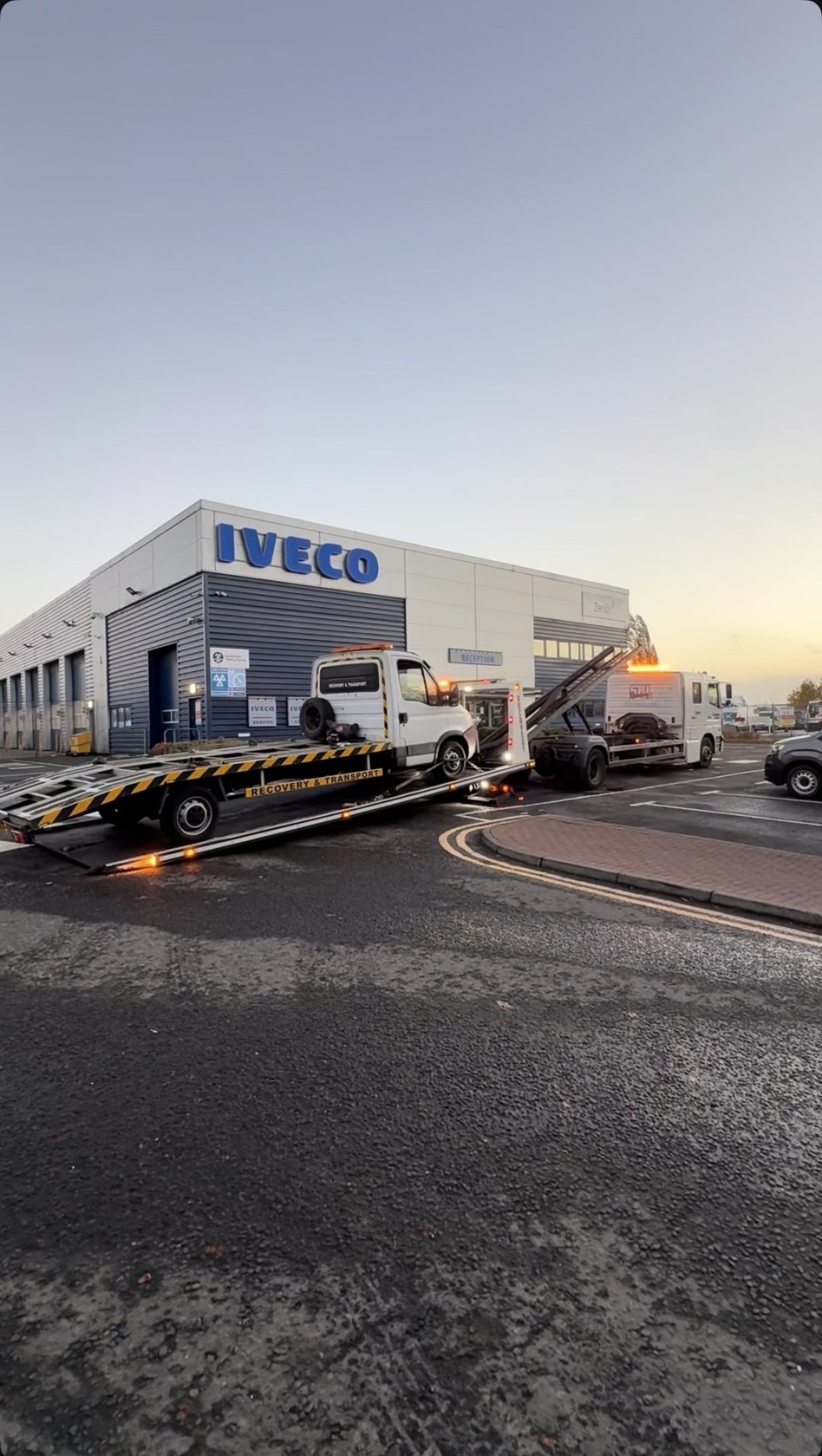
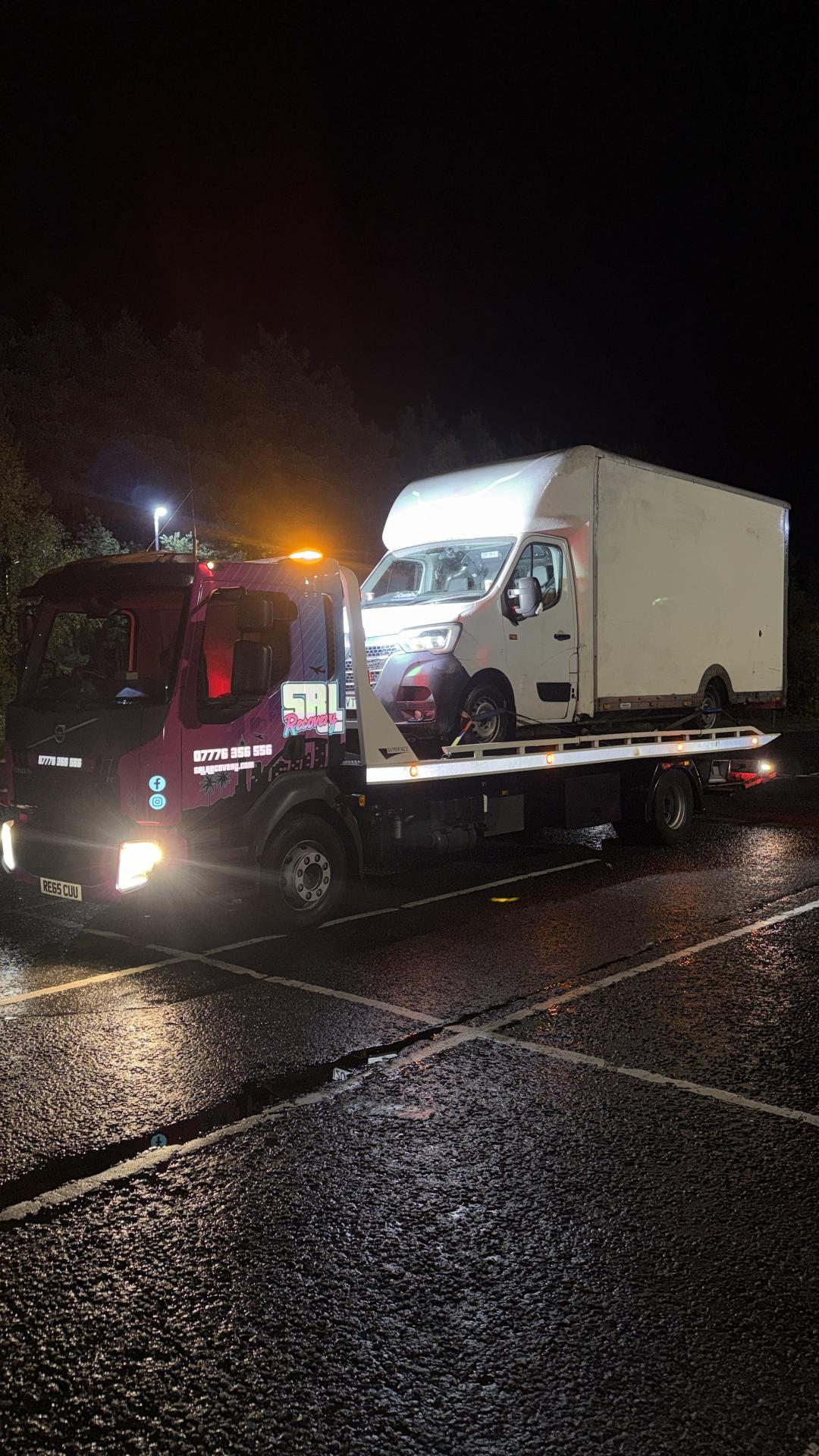
A direct recovery operator is a company that dispatches its own trucks and drivers, rather than passing your job to a network of partner garages. That distinction matters more than most drivers realise when they are stranded on the hard shoulder.
A recovery truck operator in high-visibility clothing securing a car onto a flatbed on a busy urban road during daylight, with traffic cones and a warning triangle visible
Four things drive how fast help arrives:
- Dispatch model: Direct operators dispatch immediately. Networks route your call through a call centre first.
- Fleet location: A depot near the M8, M74, or M77 corridor shortens travel time considerably.
- Time of day: Rush hour on the Kingston Bridge or Clyde Tunnel adds real minutes to any job.
- Job type: A jump start or tyre change takes less time than a full flatbed recovery.
Why Insurance Breakdown Cover Response Time Often Falls Short
Insurance breakdown cover response time is slower because most insurers do not run recovery fleets. They sell you a policy, then route your breakdown to a third-party network that prioritises its own direct customers first.
That is the structural problem. Your insurer is a middleman, and middlemen add delay.
A common mistake drivers make is assuming that because they pay for breakdown cover, the insurer has a truck waiting. It does not. The insurer has a contract with a network, and that network allocates jobs based on availability and commercial priority.
Three consequences follow:
- Queue position: Direct customers of a recovery firm often get dispatched before network referrals.
- Communication gaps: Your insurer relays information to the network, which relays it to the driver. Details get lost.
- Coverage limits: Many policies cap recovery distance or exclude certain vehicle types, which you discover on the roadside.
This is where the frustration usually starts. You have paid for cover, you are stranded, and nobody can tell you when a truck will arrive.
Direct Recovery Versus Insurance Breakdown Cover: Key Differences
Direct recovery versus insurance breakdown cover comes down to who controls the truck. A direct operator owns the fleet, dispatches it, and answers to you. An insurer outsources the job and answers to its network contract.
Factor | Direct Recovery Operator | Insurance Breakdown Cover |
|---|---|---|
Dispatch | Own fleet, immediate | Third-party network |
Typical arrival | 30 to 45 minutes | Varies by network load |
Out-of-hours cost | Often included | Frequently surcharged |
Handled in-house | Passed to claims team | |
Vehicle types | Cars, vans, EVs, motorhomes | Often restricted |
Quote transparency | Up-front phone quote | Post-incident billing |
The pattern is consistent: direct operators are faster because there is no relay. Insurance cover is often cheaper on paper because it is bundled, but the trade-off appears when you actually need it.
SRL Recovery handles 250 + recovery jobs every month across the area, and we quote up front by phone so there is no surprise on the invoice.
What to Do When Your Car Breaks Down on a Glasgow Commute
What to do when your car breaks down depends on where you are. On a motorway, safety comes first and the call comes second. On a residential street, you have more time to think.
Immediate Safety Steps Before You Call Anyone
Get yourself and any passengers out of live traffic before you do anything else.
- Pull as far left as you safely can and switch on your hazard lights.
- If you are on a motorway, exit on the left side and stand behind the barrier, never on the verge.
- Place a warning triangle only if it is safe and you are not on a motorway.
- Keep your hazard lights on and your seatbelt off once you are out.
- Call for recovery from a safe position, not from the driver's seat.
Information to Have Ready When You Call
Having the right details ready cuts minutes off your call.
- Your exact location, including junction numbers or nearby landmarks.
- Vehicle make, model, colour, and registration.
- Whether the vehicle is driveable, and what the fault appears to be.
- Your destination, so the operator can quote the full job.
- Whether you have passengers, pets, or a trailer.
How to Compare Roadside Assistance Providers Before You Need One
Comparing roadside assistance Glasgow providers before you break down takes ten minutes and saves hours later. The trick is to ask the same four questions of every provider you consider.
Use this checklist when you ring around:
- Do you dispatch your own trucks or use subcontractors?
- What is your realistic arrival window in this area, at this time of day?
- Are there out-of-hours, weekend, or bank holiday surcharges?
- Can you quote the full job up front by phone?
- Do you handle accident claims directly, and at what upfront cost?
- Can you recover electric vehicles, hybrids, and motorhomes safely?
- How do you handle multiple simultaneous jobs for a fleet?
A provider that answers all seven clearly is worth keeping on your phone. One that dodges questions about subcontracting or surcharges is telling you something.
Our own answers are straightforward: 24/7 availability with no out-of-hours, weekend, or bank holiday surcharges, an average arrival time of 30 to 45 minutes, and clear up-front phone quotes. After 17 years in the motor trade, we have seen what a vague quote costs a driver at 2am.
GOV.UK guidance on what to do if your vehicle breaks down
What to Look for in a Faster Roadside Assistance Provider
Faster roadside assistance comes down to three things: a local fleet, transparent pricing, and the ability to handle the job end to end. Everything else is marketing.
Look for a provider that runs its own trucks. That single factor removes the relay between you and the driver. A local fleet also knows the road network, which matters when a diversion adds twenty minutes to a job.
Transparent pricing is the second marker. A provider that quotes by phone, before dispatch, is a provider that has nothing to hide. One that says "we'll sort it out afterwards" is one that will.
The third marker is end-to-end capability. If you have been in an accident, you want a provider that manages the claim rather than handing you off. We handle fault and non-fault insurance claims at no upfront cost, and we transport vehicles securely and insured across the UK.
For fleets, ask about simultaneous jobs. If you run twelve vans and two break down on the same morning, you need a provider that can dispatch to both without leaving the second one waiting.
The Motor Insurers' Bureau on uninsured and hit-and-run claims
Conclusion
Breaking down is bad enough without waiting two hours for a truck that never seems to arrive. The fix is to choose a provider before you need one, and to choose one that runs its own fleet and quotes up front.
SRL Recovery offers 24/7 availability with no out-of-hours surcharges, an average arrival time of 30 to 45 minutes, and comprehensive accident claim management at no upfront cost. With 17 years of motor trade experience and a 5.0 star rating from over 132 reviews, we handle cars, vans, commercial vehicles, and electric vehicles across Glasgow and Lanarkshire.
Call 01698 700970 and get a clear quote before you commit.
Frequently Asked Questions
Are specialist roadside recovery companies faster than insurance breakdown cover?
Specialist recovery companies often arrive faster because dispatch goes directly to local operators rather than through a national call centre. Insurance breakdown cover typically routes through a central hub, adding time to the dispatch process. A local provider working across Glasgow and Lanarkshire can often reach you in 30 to 45 minutes, whereas insurance-backed services may take longer depending on demand and your location. The key difference is direct dispatch versus layered call handling.
Does breakdown cover include a guaranteed arrival time?
Most breakdown cover policies do not guarantee a specific arrival time. They may give an estimated window, but traffic, weather and demand affect actual response. Some providers quote average times, such as 30 to 45 minutes, but these are averages rather than guarantees. When comparing roadside assistance response times, ask whether the provider gives a realistic estimate based on your postcode and current conditions, not just a national figure.
Can I call a recovery company directly instead of my insurer?
Yes. You can call a recovery company directly without going through your insurer first. This is often faster because you skip the insurer's call queue and third-party dispatch. You can then decide whether to claim the cost back through your insurance or pay directly. Many drivers choose direct recovery when they need speed, especially on a commute or when a vehicle is blocking a route.
Is 24/7 roadside assistance available for cars, vans and commercial vehicles?
Yes, many providers offer 24/7 cover for cars, vans and commercial vehicles. Availability matters most for fleet managers and night-shift workers who cannot wait until morning. Check whether the provider charges out-of-hours surcharges, as some do. A provider with no surcharges for evenings, weekends or bank holidays gives you predictable costs regardless of when your vehicle breaks down.