how-to
Fleet Breakdown Recovery Glasgow: Multiple Vans Handled
Table of Contents
- Fleet Breakdown Recovery Glasgow: When Two Vans Fail on the Same Morning
- How a Fleet Breakdown Response Plan Keeps Your Vans Moving
- Commercial Fleet Breakdown Recovery: Capacity, Trucks and Timing
- Van Recovery With No Keys, Locked in Park or in a Ditch
- Secure Vehicle Storage After Breakdown
- What Fleet Managers Should Ask Before Booking Any Recovery Firm
- Fleet Breakdown Recovery Across Glasgow and Lanarkshire: What to Expect
- Frequently Asked Questions
Last updated: 12 October 2026
Fleet Breakdown Recovery Glasgow: When Two Vans Fail on the Same Morning
Fleet breakdown recovery is the process of getting a failed commercial vehicle, or several at once, off the road quickly and safely, whether it has lost its keys, locked itself in a car park or ended up in a ditch. For a fleet manager, the real test is not one van down. It is two or three going down on the same morning, across different postcodes, while drivers are still on the clock.
That scenario is our daily work at SRL Recovery. We run five tilt and slide trucks across Glasgow and the surrounding areas, handling everything from 3.5t vans up to 7.2t vehicles, plus HGV recovery and secure storage. On average we complete around 70+ jobs a week, and a fair share of those are fleets with more than one vehicle in trouble at the same time.
Below, we break down how a proper fleet breakdown response plan works, what to tell the operator on the first call, and the awkward jobs most firms avoid: no keys, locked in park, ditches, and low-clearance vehicles that need race ramps before a truck can even get near them.
How a Fleet Breakdown Response Plan Keeps Your Vans Moving
A fleet breakdown response plan is a short, written procedure that tells every driver exactly what to do in the first five minutes of a breakdown, and tells your recovery operator exactly what they are coming to collect. It is not a binder. One page per vehicle type is enough.
What matters most is the information you can hand over instantly. Fleets that keep a simple vehicle sheet, registration, make and model, gross weight, whether it is loaded, whether it has keys, cut recovery time noticeably because the operator can dispatch the right truck first time rather than sending a standard flatbed to a 7.2t vehicle.
A workable plan covers four things:
- A single emergency number that all drivers use, day or night
- A per-vehicle sheet with weight, keys and loading details
- A named decision-maker who authorises recovery without waiting for sign-off
- A default storage instruction, so vehicles have somewhere to go if a garage cannot take them that day
What to Give the Recovery Operator on the First Call
The first call should take under two minutes. Give the operator the registration, the vehicle type and weight, the exact location including which lane or car park level, whether the keys are available, and whether the vehicle is loaded. Then say how many vehicles are affected.
That last point changes everything. If you tell us two vans are down, we can plan both jobs into one dispatch window instead of treating them as two separate calls hours apart. Drivers should also state whether the vehicle is in a position to be moved at all, because a van boxed in on the third level of a multi-storey needs a different approach to one sitting on a hard shoulder.
Commercial Fleet Breakdown Recovery: Capacity, Trucks and Timing
Commercial fleet breakdown recovery comes down to capacity: how many trucks an operator can physically send, and how quickly. A firm with one flatbed cannot recover two 3.5t vans on the same morning.
Our setup is built for exactly this. Five tilt and slide trucks mean multiple jobs can run at once, and tilt and slide bodies can legally carry 3.5t vans as well as vehicles up to 7.2t. We also cover HGV recovery and offer secure storage, so a fleet does not need a second contractor for the larger vehicles.
If Two Vans Go Down the Same Day
Two simultaneous breakdowns are a scheduling problem, not a crisis, provided you flag both at once. Tell the operator how many vehicles are affected and where each one is. If both are within Glasgow and the surrounding areas, they can often be worked into the same dispatch window.
If one van is blocking a yard entrance or a loading bay, say so. That job gets priority because a blocked site costs you more than a stranded van. The second vehicle can be scheduled behind it without either driver being left waiting for hours.
| Situation | What to tell the operator | Why it matters |
|---|---|---|
| Two vans, same morning | Both registrations and locations upfront | Jobs can be planned into one dispatch |
| One van blocking a yard | Flag it as blocking access | It gets priority over a stranded vehicle |
| Vehicle is loaded | State the load and weight | Determines which truck is sent |
| Keys unavailable | Say so before dispatch | Changes the loading method entirely |
Van Recovery With No Keys, Locked in Park or in a Ditch
Van recovery with no keys, a vehicle locked inside a car park, or one that has slid into a ditch is specialist work, and it is the work we enjoy most. These jobs fail when the wrong truck turns up, so it is worth knowing how each one is handled.
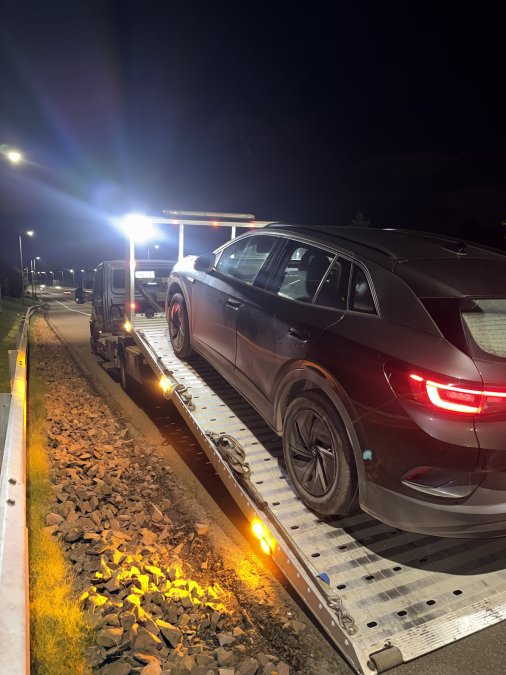
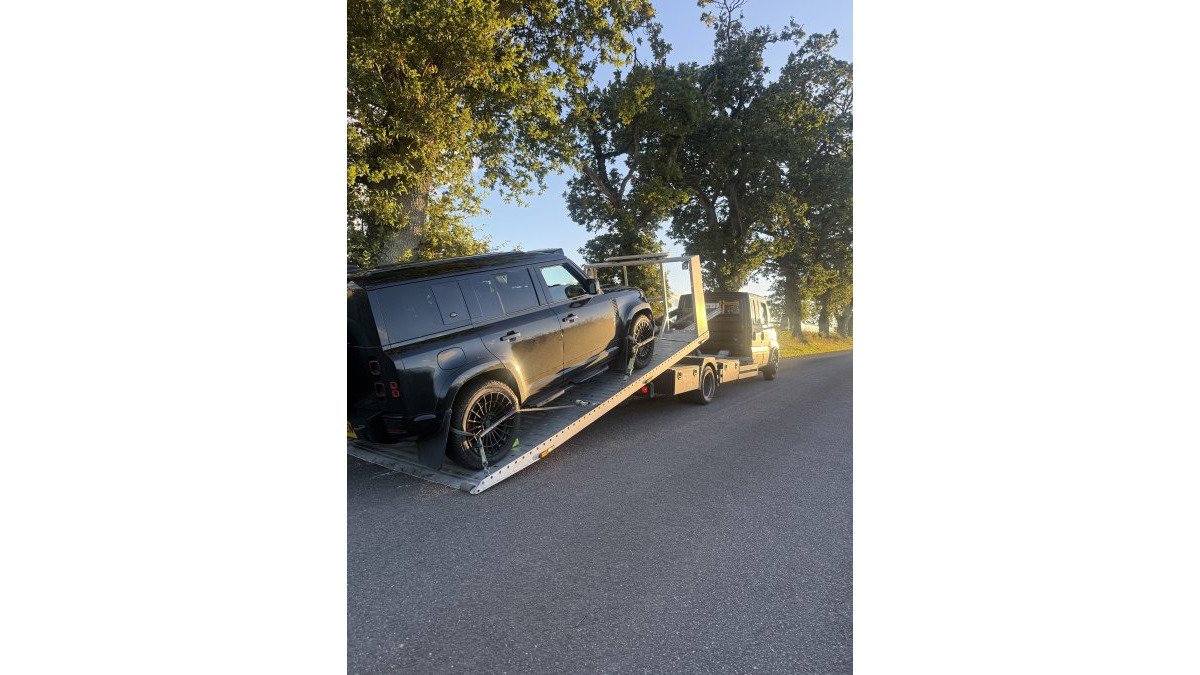
A van with no keys cannot be driven onto a flatbed. It has to be winched or skated into position, which is why tilt and slide trucks matter here. Multi-storey and underground car parks bring a height problem: the truck has to fit under the barrier and still have room to load. Low-clearance vehicles, including some electric vans and hybrids, need a super-low approach truck, plus we have a few sets of race ramps for lower vehicles.
Ditch recoveries are their own discipline. A van on its side or nose-down in a verge needs stabilising before anything is pulled, and the recovery has to avoid making body damage worse. Tell the operator the angle of the vehicle and whether anyone is still inside.
Secure Vehicle Storage After Breakdown
Secure vehicle storage after a breakdown is what stops a bad morning turning into a fortnight of problems. If your usual garage cannot take the vehicle the same day, it needs somewhere insured, locked and monitored to sit until it can be assessed.
We offer secure storage as part of the recovery service, which keeps the vehicle in one chain of custody from roadside to repair. That matters for two reasons. First, a van left on a public road or in an unsecured yard is a target for theft and further damage. Second, if the breakdown leads to an insurance claim, a documented storage period with a single operator is far easier to evidence than a vehicle that moved between three different places.
For fleets, the practical rule is simple: decide your default storage instruction now, and put it on the vehicle sheet. Drivers should not be improvising a storage decision at 2am.
What Fleet Managers Should Ask Before Booking Any Recovery Firm
Before booking any recovery firm, ask about truck capacity, out-of-hours charges, storage arrangements and how they handle claims. The answers separate operators who can cope with a fleet from those who can cope with one car at a time.
The questions worth asking:
- How many trucks do you run, and what weights can they carry?
- Do you charge extra at night, at weekends or on bank holidays?
- Can you handle two or more vehicles from the same fleet on the same day?
- Do you have secure storage, and is it insured?
- Can you recover a vehicle with no keys, or one stuck in a multi-storey?
- What happens if an insurance claim is rejected: who pays for the recovery?
That last question is the one most fleets forget to ask. It is also the one that causes the biggest argument after the event. Get the answer in writing before you need the service.
Fleet Breakdown Recovery Across Glasgow and Lanarkshire: What to Expect
Fleet breakdown recovery across Glasgow and Lanarkshire should follow the same pattern every time: a clear quote on the phone before dispatch, a truck sent that matches the vehicle, and a driver who knows what to do with a keyless or ditched van. No surprises on the invoice, no waiting for a second truck because the first one was wrong.
We welcome all work private and commercial we carry out, and we also carry out repossession work working alongside other companies. Whether it is one van or a fleet of twelve, the process is the same: tell us what is down, where it is, and whether the keys exist. From there, we plan the job and get it moving.
Frequently Asked Questions
What should a business do when multiple vans break down?
Call a recovery operator that runs more than one truck and tell them upfront how many vehicles are affected. Give each van's location, model, gross weight and whether it can roll or steer. A fleet breakdown response plan should already hold this information for every vehicle. SRL Recovery handles around 70 jobs a week across Glasgow and Lanarkshire and can dispatch multiple trucks rather than making you wait for a second booking slot.
Can a van be recovered with no keys or if it is locked in park?
Yes. No-key and locked-in-park vehicles are a specialist job, not a standard tow. The truck needs skates or a sliding bed to move a van that will not roll or steer. SRL Recovery treats vehicles with no keys, locked in park or sitting in ditches as a core part of its work, using a low-approach truck and tilt and slide beds, so you do not need the key present to get the van off site.
How much weight can a tilt and slide truck carry for a fleet?
SRL Recovery's five tilt and slide trucks can legally carry 3.5t vans and vehicles up to 7.2t, with HGV recovery also covered. That range matters for mixed fleets, where a small car-derived van and a larger 7.2t box van may need collecting on the same day. Tell the operator each vehicle's gross weight when booking so the right truck is sent first time.
Does a fleet pay extra for recovery at night or on a bank holiday?
SRL Recovery runs 24/7 with no out-of-hours, weekend or bank holiday surcharges, and quotes up front over the phone. For fleets working night shifts, that removes the risk of a midnight callout costing more than a daytime one. Ask any provider to confirm their surcharge position in writing before you add them to your fleet breakdown response plan.
A fleet with twelve vans across Glasgow will eventually face a morning when two or three fail at once. The question is whether your recovery operator can send enough trucks to clear them the same day. At SRL Recovery, five tilt and slide trucks, coverage from 3.5t vans up to 7.2t and HGV recovery, secure storage, and more than 70 jobs a week mean multiple breakdowns get handled as one planned operation rather than a queue. Call 01698 700970 and we will get your fleet moving again.