how-to
Low Approach Recovery for Lowered Vans Explained
Last Updated: November 12, 2026
Quick Summary
Low approach recovery is the process of moving a vehicle that sits close to the ground using equipment that can get under the front bumper without scraping. Lowered vans often need tilt-and-slide beds, extended ramps or skates rather than a standard flatbed.
- Standard recovery ramps often catch a lowered van's front splitter, skirts or bumper.
- Measure the front lip, side skirt clearance and wheelbase, and tell the operator before dispatch.
- Photograph the van's front splitter, bumper and skirts before it is loaded.
- Long-wheelbase vans can ground at the breakover point even when both bumpers clear.
- Confirm the price on the phone before dispatch, since it depends on distance and equipment.
Table of Contents
- What Low Approach Recovery Means for a Lowered Van
- Why a Standard Recovery Truck Can Damage a Lowered Van
- How Tilt-and-Slide and Low-Angle Equipment Protects Your Van
- Van Recovery With Low Ground Clearance: Step by Step
- What to Do If Your Lowered Van Cannot Roll
- Lowered Van Recovery: Costs and Factors Behind a Quote
- Booking Low Approach Recovery for Your Van With SRL Recovery
- Frequently Asked Questions
What Low Approach Recovery Means for a Lowered Van
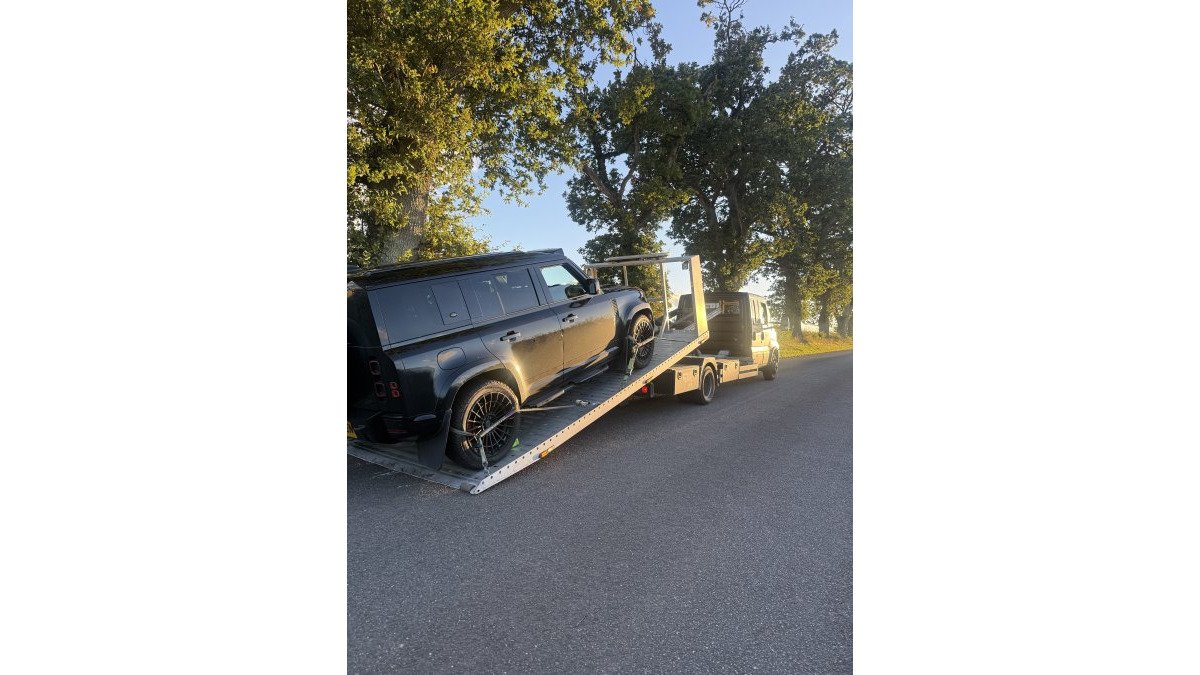
Low approach recovery is the process of moving a vehicle that sits close to the ground using equipment that can get under the front bumper without scraping. For a lowered van, this matters because a standard recovery truck often cannot reach a van with a reduced ground clearance.
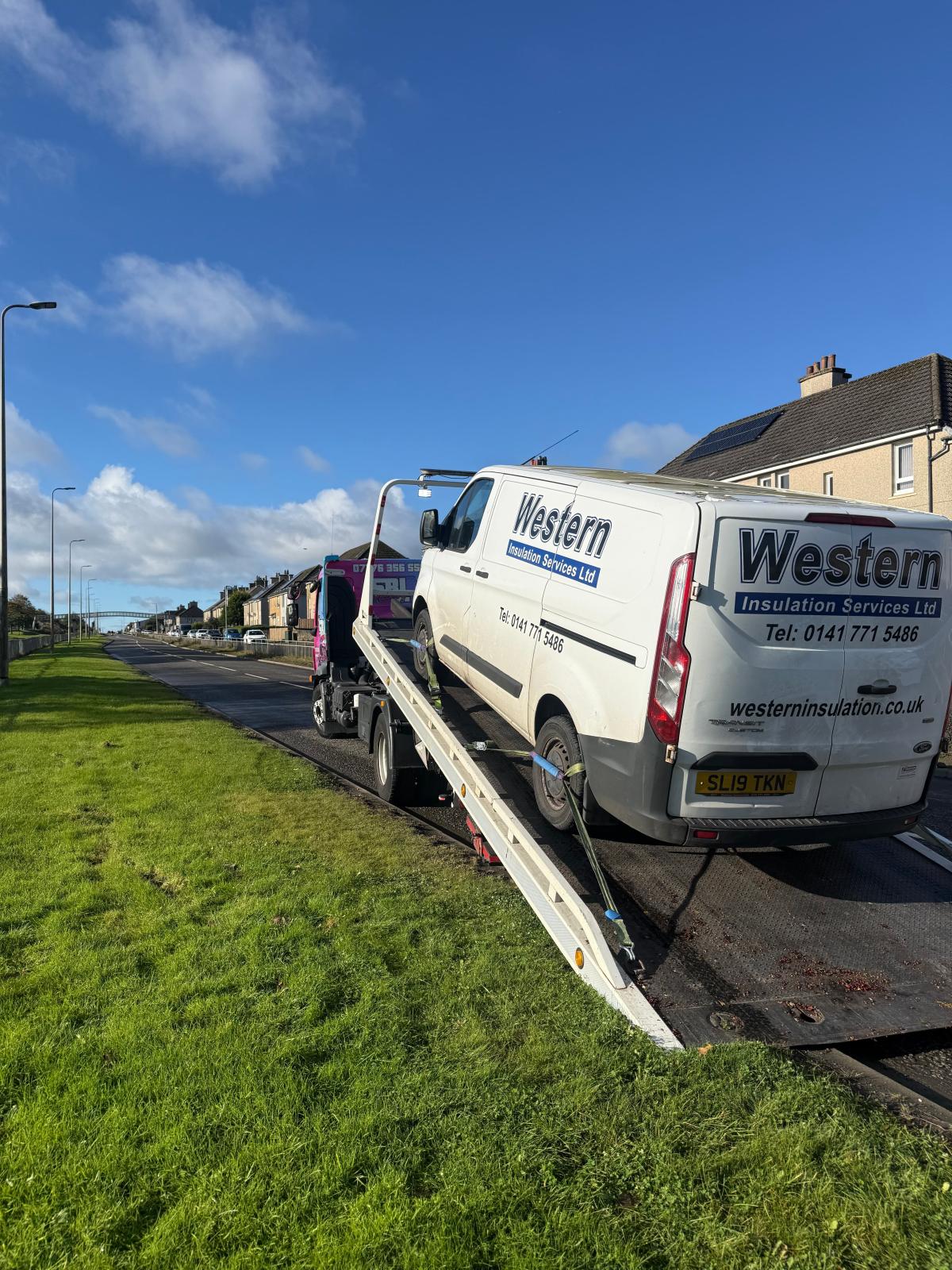
Lowered vans often have modified suspension, deep front splitters or wide body kits. Each of these features brings the lowest point of the van closer to the road surface.
Why a Standard Recovery Truck Can Damage a Lowered Van
A standard flatbed or wheel-lift truck is built for a typical ride height. When a lowered van is winched onto it at a steep angle, the front splitter, lower bumper and side skirts can all catch on the ramp edge.
Common damage includes:
- Cracked or torn front splitters
- Scraped and chipped paintwork on the front bumper
- Damaged underbody panels and exhaust components
Many of these faults are not visible at first. A driver may only notice the problem when they later find a cracked splitter or a sagging bumper.
How Tilt-and-Slide and Low-Angle Equipment Protects Your Van
Because the ramp angle is much gentler, the front of the van clears the ground without catching.
Low-angle equipment works in a similar way. Extended ramps spread the climb over a greater distance, so the approach angle stays shallow. Some operators also use bed-to-ground transitions that reduce the chance of the bumper touching the road.
Van Recovery With Low Ground Clearance: Step by Step
A lowered van is not simply a low car with a bigger body. Panel vans and crew vans have long wheelbases, deep front overhangs and side skirts that sit close to the road along the whole flank. That shape changes how the van has to be loaded, so the sequence below is written for vans rather than for sports cars.
Before you call: assess the van
Walk around the van and note the lowest point at the front, the lowest point along the side, and whether the rear overhang is close to the ground.
Also note the wheelbase. A long-wheelbase van has a breakover point between the axles that can ground on the ramp crest even when both bumpers clear. This is the detail most drivers forget to mention and the one that most often causes damage.
Step by step
- Stop safely and call SRL Recovery on 01698 700970. Give your location as a postcode or landmark, describe what has happened, and confirm the van's make, model and any suspension or body modifications.
- Describe the van's geometry. State the front clearance, the side skirt clearance, the wheelbase and whether the van can roll, steer and brake.
- Get the price on the phone before dispatch. SRL Recovery quotes local recovery from a £60 call-out plus £1.50 per mile, with a £40 winch or skate fee only where required, all subject to VAT. There is no out-of-hours, weekend or bank holiday surcharge.
- Photograph the van before loading. Take clear pictures of the front splitter, bumper, side skirts and rear valance so you have a record of their condition.
- Clear the approach. Move loose items out of the van, remove anything that could fall during loading, and make sure the operator has a clear, level approach to the front of the van.
- Watch the approach angle as the van is winched. The operator should check the ramp angle against the front lip before the wheels move. If the angle looks too steep, the load should be stopped and a different method used.
- Check the breakover point. As the van reaches the ramp crest, watch the side skirts and the area between the axles. This is where a long-wheelbase van is most likely to ground.
- Confirm the straps avoid the bodywork. Straps should hold the van by the wheels or chassis points, not by the skirts or bumper.
- Inspect on arrival. Look over the front lip, skirts and rear valance before you drive off, and compare against your photographs.
Watch out: a van that has been lowered on coilovers or air suspension may sit differently once the engine is off and the air has settled, so the clearance you measured a minute ago may not be the clearance the operator sees on arrival.
Loading and unloading decision points
The operator decides how to load based on what they see, but you can follow the logic:
- Ramp angle versus front lip. If the ramp is steeper than the front clearance allows, the van needs extended ramps, a tilt-and-slide bed or skates rather than a direct winch.
- Breakover versus wheelbase. A long-wheelbase van may need the bed tilted further or the rear of the bed raised to keep the middle of the van off the ramp crest.
- Ground surface. Uneven, sloping or wet ground changes the effective angle, so a ramp that works on flat tarmac may not work on a cambered verge.
Unloading follows the same checks in reverse. The van should be lowered slowly, with someone watching the front lip and skirts, and inspected before it is driven away.
If the van is on a live carriageway, safety comes first. Follow the Highway Code guidance on breakdowns, which you can read on GOV.UK, and call 999 if anyone is hurt or in danger.
What to Do If Your Lowered Van Cannot Roll
A van that cannot roll is harder to recover, but it is still manageable. Our step-by-step guide on arranging recovery for a van with a trailer walks through what to prepare before the operator arrives.
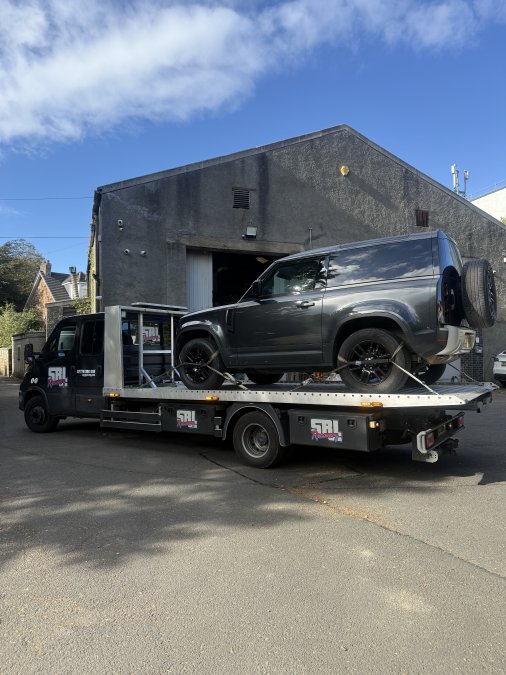
If you are on a road and the van is unsafe to leave, turn on your hazard lights and move to a safe place if it is possible (The Highway Code - Breakdowns and incidents (275 to 287) - Guidance). Follow the Highway Code guidance on breakdowns, which you can read on GOV.UK (Breakdowns and incidents (274 to 287)).
Roadside assistance may be able to help with simple faults, but a van that cannot roll usually needs full recovery. Our guide on roadside assistance for a broken-down van explains the steps to take if your van has stopped.
Lowered Van Recovery: Costs and Factors Behind a Quote
A low-approach recovery quote is built from the job itself, not from a fixed menu. Two lowered vans on the same street can cost different amounts because the equipment needed, the access and the condition of the van all change the work involved. SRL Recovery quotes on the phone before dispatch, so you know the figure before the operator sets off.
What drives the price
- Distance. Local recovery is charged as a call-out plus a per-mile rate. SRL Recovery charges from a £60 call-out plus £1.50 per mile for local recovery, and £120 flat plus £1.50 per mile for motorway and live-lane recovery. All prices are subject to VAT.
- Equipment needed. A tilt-and-slide bed, extended ramps or skates take longer to set up than a standard flatbed load. Where a winch or skate is required, SRL Recovery applies a £40 fee only where it is actually needed.
- Whether the van rolls. A van that rolls and steers can be positioned by hand and loaded more quickly. A van with a seized wheel, a broken hub or a locked transmission needs winching or skates, which adds time and care.
- Access. A van in a tight underground car park, on a steep driveway or on a cambered verge is harder to load than one on flat tarmac. Tell the operator about low barriers, kerbs or overhanging branches when you call.
What a specialist quote should include
A quote for a lowered van should cover the equipment, the loading method and the destination, not just a mileage figure. Ask whether the price includes the winch or skate if one is needed, whether VAT is included, and how payment is taken.
Watch out: a quote that looks low but excludes the winch fee, VAT or a longer route to a suitable loading point can end up costing more than a quote that sets out the full job upfront.
How to compare quotes without naming names
When you ring round, ask each operator the same four questions: what bed angle they can achieve, whether they carry extended ramps or skates, whether the winch fee is included, and whether the price is fixed before dispatch.
For the published rates and how they apply, see the car recovery prices page. For a van that needs moving rather than recovering, SRL Recovery also offers vehicle transport.
Broken down now? Call SRL Recovery on 01698 700970 for immediate dispatch, 24/7.
Several things shape the price of a low approach recovery, and the table below sets them out.
| Factor | Effect on the job | Note |
|---|---|---|
| Distance | Charged per mile | Call-out plus £1.50 per mile for local recovery |
| Equipment needed | Longer set-up | Tilt-and-slide, extended ramps or skates |
| Whether the van rolls | Quicker or slower loading | Seized wheels or locked transmission need winching |
| Access | Harder loading | Tight car parks, steep driveways, cambered verges |
| Condition and modifications | Changes approach | Dropped air suspension or cracked splitter |
| Winch or skate fee | Added cost | £40, only where required |
SRL Recovery local recovery price components
Booking Low Approach Recovery for Your Van With SRL Recovery
If your lowered van has broken down, SRL Recovery can help. SRL Recovery offers van recovery in Glasgow, open 24 hours a day.
Broken down now? Call SRL Recovery on 01698 700970 for immediate dispatch, 24/7.
Before you book, have these details ready:
- Your exact location, such as a postcode or landmark
- What has happened to the van
- The van's make and model
- A contact number
We are based in Cambuslang, Glasgow, and cover Glasgow and Lanarkshire, with an average arrival time of 30 to 45 minutes. You can also reach us on WhatsApp at 07776 356 556.
FAQ
Is low approach recovery more expensive than standard recovery?
Costs depend on the distance, equipment needed and whether the van can roll. SRL Recovery confirms the price on the phone before dispatch, so you know the figure before the operator sets off.
Can a standard recovery truck tow a lowered van?
It can, but a standard truck often cannot reach a lowered van without the front splitter catching. Ask the operator whether they have tilt-and-slide or extended ramp equipment before they arrive.
What should I tell the operator about my lowered van?
Tell them the make and model, any body kit or modifications, and whether the van can roll. This helps them choose the right equipment.
Do I need a membership to book low approach recovery with SRL Recovery?
No. There is no membership or breakdown cover needed. You pay once the job is complete, by cash, card or bank transfer.
SRL Recovery is a 24/7 car and breakdown recovery service based in Cambuslang, Glasgow, covering Glasgow and Lanarkshire with an average arrival time of 30 to 45 minutes. Call 01698 700970 or WhatsApp 07776 356 556 for immediate dispatch.
Frequently Asked Questions
What is low approach recovery for a lowered van?
Low approach recovery uses a tilt-and-slide bed or extended ramps with a shallow loading angle, so a van with a low front overhang can be winched on without its front bumper, splitter or underbody touching the ground. If you are unsure whether your van needs it, call 01698 700970 and describe the vehicle before dispatch.
Can a standard recovery truck recover a lowered van?
A standard flatbed can sometimes manage a lowered van, but the steeper ramp angle often causes the front end to scrape or bottom out. Telling the operator about the ride height before they arrive helps them choose suitable equipment for the job.
Can a lowered van be recovered if it cannot roll?
Yes. A winch or skate fee of £40 applies only where one is required. Tell the operator whether the wheels turn and whether the handbrake is stuck. Call SRL Recovery on 01698 700970 for a price quoted on the phone before dispatch.
