how-to
Roadside Assistance for a Broken Down Van: What to Do
Last Updated: October 23, 2026
Quick Summary
Call roadside assistance for a broken down van as soon as the vehicle cannot be made safe and driven on, or when you cannot diagnose the fault within a few minutes. Get everyone out on the passenger side and behind the barrier first, then call with your road position, vehicle weight and load details.
- Leave the bonnet closed, as a van fire or sudden steam release is not worth the risk.
- Motorway marker posts carry a letter and number that pinpoint your location faster than any description.
- A van with no keys, locked in park or in a ditch is a specialist recovery, not a standard tow.
- Photograph all four corners and the roof before loading to protect against damage disputes.
- Confirm the destination garage's address and opening hours before the recovery truck sets off.
Table of Contents
- What to Do When a Van Breaks Down: The First Ten Minutes
- When to Call Roadside Assistance for a Broken Down Van
- Van Recovery With No Keys: Locked, Immobilised or Stuck in Park
- Vehicle Recovery Preparation Checklist
- Fleet Breakdown Management: Keeping the Other Vans Moving
- What Roadside Assistance for a Broken Down Van Costs
- Conclusion
- Frequently Asked Questions
What to Do When a Van Breaks Down: The First Ten Minutes
A van that dies on the hard shoulder is a different problem from a car that does the same thing. It is heavier, it sits higher, and if it is loaded, it cannot be pushed clear. At SRL Recovery we run five tilt-and-slide trucks and complete around 90 recovery jobs every month, and the calls that go smoothly are almost always the ones where the driver did the right things in the first ten minutes. This guide covers exactly that: what to do, who to call, and what roadside assistance for a broken down van should actually involve.
The first rule is blunt. Get everyone out on the passenger side and behind the barrier before you do anything else.
Get Safe, Then Get Help
Safety comes before diagnosis. Switch on your hazard lights, put on a high-visibility vest if you carry one, and get every occupant out through the door facing away from traffic. Stand behind the barrier, not beside the vehicle.
Leave the bonnet closed. A van fire or a sudden steam release is not worth the curiosity.
Once everyone is clear, call for help. Give the operator your road position, the direction you are travelling, and the nearest marker post or junction number. Motorway marker posts carry a letter and number that pinpoint you faster than any description.
What to Tell the Operator on the Phone
The details you give in the first call decide how quickly the right truck arrives. Have these ready:
- Vehicle type and weight - a 3.5t panel van needs different equipment from a 7.2t box van
- What happened - warning light, loss of power, tyre, collision, or refusal to start
- Whether it will roll or steer - this decides whether a standard lift works
- Load details - weight and whether it is secure
- Key situation - do you have keys, is the vehicle locked, is it stuck in park
The last two catch people out. A van that will not come out of park, or one with no keys at all, is a recovery job rather than a roadside fix.
When to Call Roadside Assistance for a Broken Down Van
Call roadside assistance for a broken down van as soon as the vehicle cannot be made safe and driven on, or when you cannot diagnose the fault within a few minutes. Do not wait to see if it starts again.
Some faults are roadside fixes. A flat battery, a wheel change, a blown fuse, or a loose hose can often be sorted where you stand. Others are not:
- A snapped belt or a failed water pump
- Gearbox or clutch failure
- Damage from a collision
- A van that will not select a gear or release its parking brake
The honest answer is that most modern vans give you very little to work with at the roadside. If the fault is not obvious in the first few minutes, stop guessing. Recovery is cheaper than a second breakdown in a live lane. Remaining inside a vehicle becomes significantly more hazardous during a smart motorway breakdown, so prioritising your exit to a place of safety is the only sensible course of action.
Van Recovery With No Keys: Locked, Immobilised or Stuck in Park
A van with no keys, locked in park, or sitting in a ditch is a specialist recovery, not a standard tow. Standard roadside operators often decline these jobs because the vehicle cannot be steered or rolled normally. We take them on regularly, using a super-low approach truck and race ramps for vehicles that sit close to the ground.
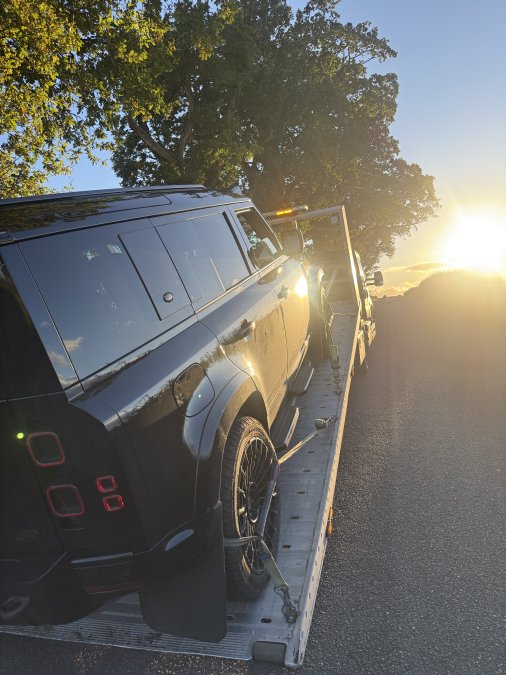
The key to these jobs is loading without dragging. A van locked in park has its transmission holding the wheels, so winching it onto a bed needs skates or a bed that slides and tilts to meet the vehicle. For low-slung vans, ramps bridge the angle so bumpers and sumps clear the deck.
Vehicles in ditches need a different approach again. The recovery plan depends on the angle, the ground, and whether the van is on its side or upright. Never try to drag a van out with another vehicle and a strap. The forces involved can roll it further or injure someone standing nearby.
Vehicle Recovery Preparation Checklist
A vehicle recovery preparation checklist saves time on the day and prevents disputes later. Work through it before the truck arrives, or keep it on file for fleet use.
- Everyone out of the vehicle and behind the barrier
- Hazard lights on, ignition off where safe
- Keys, documents and valuables removed
- Load secured or declared to the operator
- Vehicle weight and dimensions confirmed
- Any damage photographed before loading
- Destination confirmed: home, garage, or secure storage
- Insurer or fleet contact notified
- Keys handed to the driver, or the no-key situation explained
The destination question matters more than people expect. A van dropped at the wrong garage on a Friday afternoon can sit there until Monday. Confirm the address and the opening hours before the truck sets off.
Fleet Breakdown Management: Keeping the Other Vans Moving
Fleet breakdown management is the difference between one van off the road and a whole schedule collapsing. If two vans fail on the same morning, the fleet manager needs a recovery operator who can dispatch more than one truck.
We plan for this. With five tilt-and-slide trucks, we can handle multiple jobs on the same day, and our trucks can legally carry 3.5t vans and up to 7.2t. That range covers most light commercial fleets without needing a second contractor.
A few habits keep a fleet moving:
- Keep a single recovery contact number on file for every driver
- Record each van's weight and dimensions in advance
- Agree a default destination for each vehicle type
- Log every breakdown with time, location and fault
- Review the log monthly for repeat offenders
That last point is where the money is. A van that breaks down three times in six months is usually cheaper to replace than to keep recovering.
What Roadside Assistance for a Broken Down Van Costs
Pricing for roadside assistance for a broken down van depends on the vehicle, the distance, the time of day, and the complexity of the recovery. A straightforward van recovery on a weekday is not priced the same as a no-key recovery from a ditch at 2am. We quote clearly on the phone before dispatch, with no out-of-hours, weekend, or bank holiday surcharges, and current rates are listed on our vehicle recovery pricing page.
Three things drive the figure:
- Vehicle weight and size - a 7.2t van needs a bigger truck than a 3.5t
- Recovery complexity - winching, skates, or ramps all add time
- Distance - local moves cost less than nationwide transport
Be wary of any operator who will not give a figure before setting off. A quote given on the phone, confirmed in writing, is the only protection against a surprise invoice.
Conclusion
A breakdown is stressful enough without wondering whether the operator will turn up, whether the price will change, or whether your van will be dragged onto a bed by someone who has never handled a locked vehicle. We built SRL Recovery around those exact worries: five tilt-and-slide trucks that legally carry 3.5t vans and up to 7.2t, a super-low approach truck with race ramps for low vehicles, secure storage, and clear quotes before we set off. We have 17 years of motor trade experience and a 5.0 star rating from more than 132 Google reviews. Call 01698 700970 and we will get your van, and your day, moving again.
Frequently Asked Questions
Can roadside assistance recover a van?
Yes. A recovery operator can transport a van that cannot be driven, whether it has a failed clutch, a snapped belt, a flat battery it cannot jump-start from, or damage after a collision. Tilt-and-slide trucks carry vans up to 3.5 tonnes, and heavier 7.2-tonne vans need a suitably rated vehicle. Tell the operator the van's gross weight when you call so the right truck is dispatched first time. Roadside assistance for a broken down van usually starts with a roadside fix and moves to recovery only if the fault cannot be solved on the spot.
Can a van be recovered if it has no keys?
It can. Van recovery with no keys is routine for experienced operators, who load the vehicle onto a flatbed using winches and skates rather than driving it. The same applies to a van locked in park or one that has rolled into a ditch. Tell the operator up front that there are no keys, because it changes the equipment and the time needed. Never try to force a locked van open or drag it yourself; you risk damaging the transmission, the steering lock or the bodywork, and that damage is rarely covered.
What information should I give a recovery operator?
Give your exact location, including the road number, direction of travel and nearest junction or landmark. State the van's make, model and gross weight, whether it has keys, and whether it is in a live lane, on a verge or off the road entirely. Describe any load, roof rack or tow bar. Mention injuries or spilled fluids. The more precise the details, the faster the right truck arrives, and accurate information is what keeps a quote firm rather than revised on arrival.
How can a business reduce disruption when a van breaks down?
Fleet breakdown management starts before anything goes wrong. Keep a single record of each van's registration, gross weight and key status, and give drivers one number to call rather than letting them search at the roadside. Agree a recovery arrangement in advance so dispatch is immediate. Where several vans run the same route, a single operator who can send more than one truck matters. SRL Recovery runs five tilt-and-slide trucks and completes around 90 recovery jobs every month, so two vans down on the same day can be handled together rather than queued.
